
How to Choose a Wearable Neck Cooler in 2026: Ignore the Cooling Numbers, Watch the Runtime and Humidity
Wearable neck coolers have gone from novelty to genuine summer must-have this year, and with a run of hot weeks and a few high-profile launches, the shelves are suddenly full of them. They promise a personal air conditioner that rides on your shoulders — and the listings sell that dream with dramatic numbers: a headline "drops skin temperature by X degrees," "20% stronger cooling," "8 hours of relief." Those are exactly the figures least likely to hold up on a sweaty afternoon. It's easy to buy one that feels amazing in the store's air conditioning and does almost nothing in the heat you bought it for.
Here is exactly what matters when choosing a wearable neck cooler, and what is just marketing noise.
The short answer
If you want to skip the deep dive, here is the baseline of what to look for in a modern wearable neck cooler:
- Runtime on full cooling is the real number: Check this first. Advertised six-to-eight-hour figures are usually measured with the cooling plate low or off. Real runtime on meaningful cooling is often closer to three to five hours, and less in real heat.
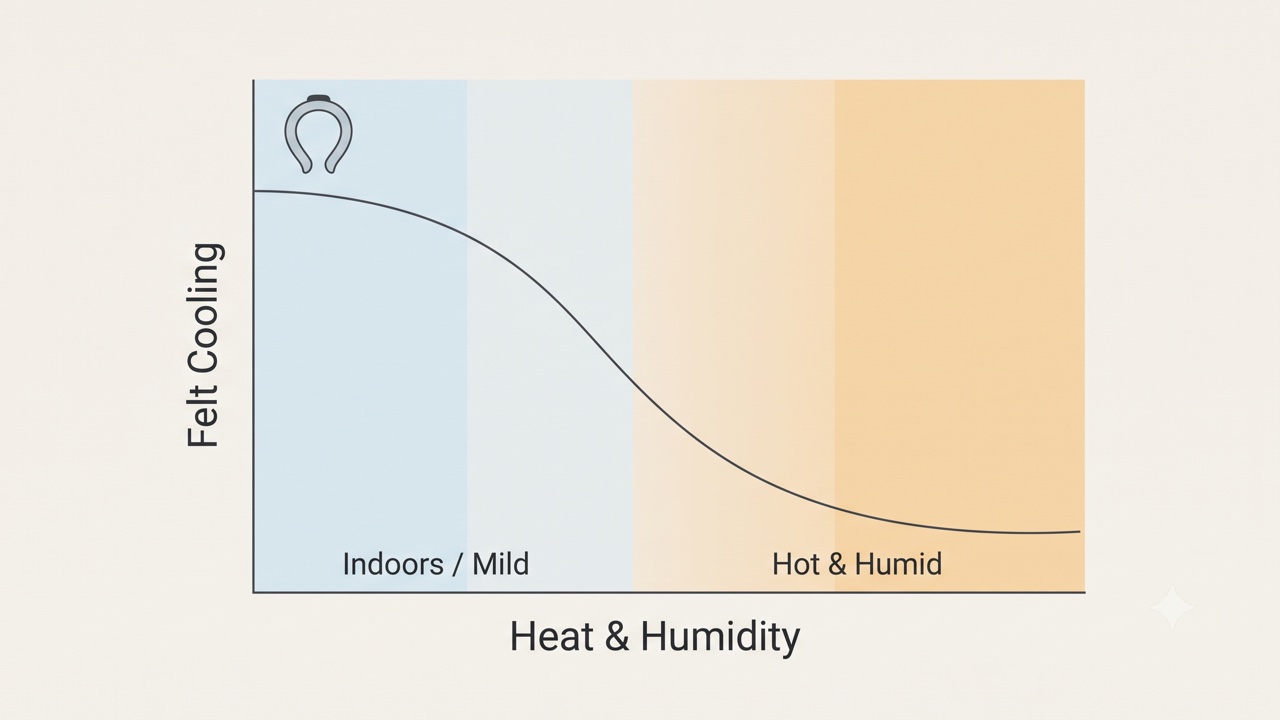
- Heat and humidity break them: A cooling plate works best indoors or in moderate warmth. Once it's genuinely hot (past the low 90s °F) or humid, the effect shrinks fast — this is supplementary cooling, not a body-wide AC.
- Peltier vs fan-only is a real trade-off: A Peltier plate gives instant cold but drains the battery, adds weight, and vents waste heat. Fan-only models run far longer but can't beat the air temperature.
- The battery is sealed: Like most wearables, the lithium cell isn't replaceable and degrades, so treat a neck cooler as a two-to-three-year device, not forever.
Compare live prices and aggregated Reddit sentiment scores for top neck coolers on Avorio →
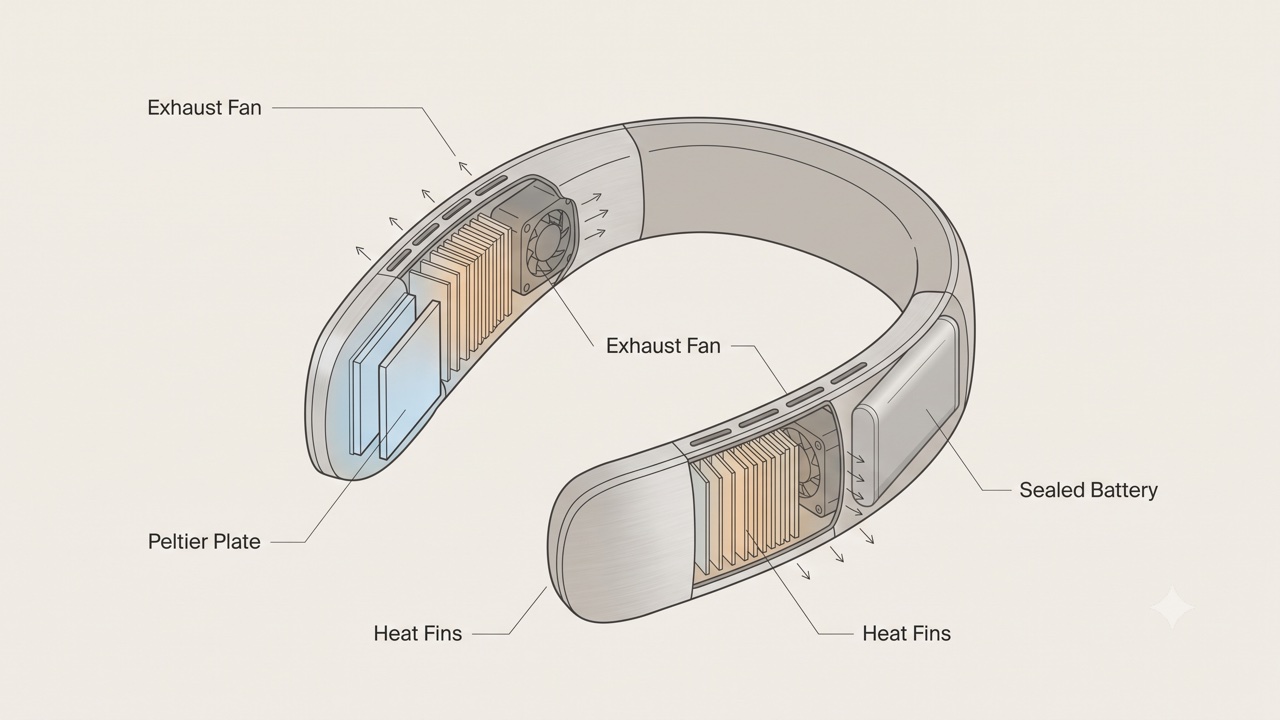
Before we break down what to look for, here's what's actually riding on your shoulders — and why the cooling plate is only half the story:
Runtime on full cooling is the number that matters
This is the spec the packaging quietly fudges, and it's the one that decides whether the cooler helps when you need it.
Almost every neck cooler advertises a runtime — commonly six to eight hours — that sounds like it'll carry you through a whole day outside. The catch is how that figure is measured: typically with the thermoelectric plate on its lowest setting or switched off entirely, so the battery is only powering the fans. Turn the cooling up to the level you actually bought it for and the draw multiplies.
Independent testing tells the real story: on meaningful cooling, most devices deliver closer to three to five hours, and in genuinely hot weather some Peltier models run flat in about two hours. That's the difference between a cooler that lasts your commute-plus-errands and one that dies before lunch. Look for runtime quoted at maximum cooling, not the flattering headline number, and if you need all-day coverage assume you'll be recharging midday or carrying a power bank.
The cooling claims collapse in heat and humidity
The second set of numbers — "drops temperature by 7°C," "20% more cooling" — are technically true and practically misleading. A Peltier plate genuinely lowers the skin surface temperature of the patch it touches by several degrees, and that feels wonderful. But two things the marketing skips: it only cools the small area of contact, not your body, and its performance is relative to the surrounding air.
That second point is the killer. A thermoelectric cooler can only pull the plate so far below ambient, so the hotter it gets, the weaker the effect — reviewers consistently find these devices struggle once the temperature climbs past the low 90s Fahrenheit, exactly the conditions you'd most want relief. Humidity makes it worse: when sweat can't evaporate, the small cooled patch does much less for your overall comfort. A neck cooler is real, targeted relief for indoor heat, shaded outdoor sitting, or moderate warmth — not a wearable air conditioner for a heatwave. Buy it understanding that limit and it delights; buy it expecting whole-body AC and it disappoints.
Peltier or fan-only: pick for your conditions, not the price
The market splits into two types, and the pricier one isn't automatically right for you. Peltier (thermoelectric) coolers have the cold plate that gives that instant chilled-metal sensation — the headline feature — but it comes at a cost: far higher power draw that shortens runtime, extra weight on your neck, and waste heat the device has to vent, which is why they're bulkier and can run warm on the exhaust side. Fan-only neck coolers just move air; they're lighter, quieter on the battery, and last far longer, but they can never get below the ambient temperature.
So match the type to reality. If you're mostly indoors or in moderate heat and want that crisp cooling hit, the Peltier plate earns its keep. If you'll be out for hours in dry warmth and value longevity and light weight over a cold plate, a good fan-only model may serve you better — and cost less. In hot, humid air the plate's advantage shrinks anyway, narrowing the gap. Don't pay for Peltier by default; pay for it if your conditions actually reward it.
Weight, fit, and the battery you can't replace
A neck cooler only helps if you keep it on, and two practical things decide that. Weight and fit: you're wearing this around your neck for hours, so a heavy or poorly balanced unit becomes a literal pain, and a one-size arc that's too tight or too loose either pinches or slips and loses skin contact — which is exactly what the Peltier plate needs to work. Check the actual weight and whether the fit suits your neck before the cooling spec.
Then the long game: like nearly every wearable, the lithium battery is sealed inside and not user-replaceable, and it loses capacity with every charge cycle. A cooler that ran four hours new will run noticeably less two summers later, and there's no swapping the cell. That makes it a two-to-three-year device, so factor replacement into the price rather than treating it as a one-time buy.
When you buy a wearable neck cooler, you're committing to a runtime the box overstates, a cooling effect the weather can erase, and a battery on a slow countdown. The launch-day demo, filmed in a comfortable studio, can't tell you how it holds up on a 95-degree, humid afternoon two summers from now — but the people who've sweated through one can.
Real runtime on full cooling, hot-weather performance, and long-term battery life don't show up in product photos. Use Avorio to aggregate real long-term owner reviews, check Reddit sentiment, and find the best live price on the neck cooler that actually holds up in the heat →
Don't rely on static reviews to make the final call. Avorio aggregates thousands of real user reviews, filters out sponsored and AI-generated content, scores real-world cooling, runtime, and battery longevity across Reddit, YouTube, and social media, and finds the lowest live price.
Search wearable neck coolers on Avorio →
Frequently asked questions
Do wearable neck coolers actually work?
They do provide real, measurable cooling — a thermoelectric (Peltier) plate against the neck can lower skin surface temperature by several degrees and feels genuinely refreshing indoors or in moderate heat. The important limit is that they cool the small patch of skin they touch, not your whole body, and their effectiveness drops sharply once the air gets very hot or humid. Reviewers consistently find they work best as supplementary personal cooling in indoor or shaded conditions, and struggle to keep up outdoors once temperatures climb past the low 90s Fahrenheit. Treat one as targeted relief, not a wearable air conditioner.
How long do neck coolers last on a charge?
Far less than the box usually claims once you actually turn the cooling up. Advertised figures of six to eight hours are typically measured with the Peltier plate on a low setting or off, running only the fans. Independent testing repeatedly finds real runtime on meaningful cooling lands closer to three to five hours, and in genuinely hot weather some Peltier models manage only a couple of hours before the battery is flat. If you need all-day coverage, plan on charging midday or carrying a power bank.
Is a Peltier cooling plate better than a fan-only neck cooler?
It depends on the conditions and what you'll tolerate. A Peltier plate delivers that instant cold-metal sensation a fan can't, which is why it's the headline feature — but it draws far more power (shortening runtime), adds weight, and dumps waste heat that the device has to vent away from your neck. Fan-only neck coolers are lighter, quieter on battery, and run much longer, but they only move air and can't beat the ambient temperature. In hot, humid conditions the plate's advantage shrinks, so match the type to how and where you'll actually use it rather than assuming the pricier Peltier model always wins.
Avorio cuts through sponsored content to surface authentic product reviews from Reddit, YouTube, and social media — and finds the best live prices. Search wearable neck coolers on Avorio →