

How to Choose a Portable Photo Printer in 2026: Ignore the Printer Price, Watch Cost per Print, Print Tech, and Size
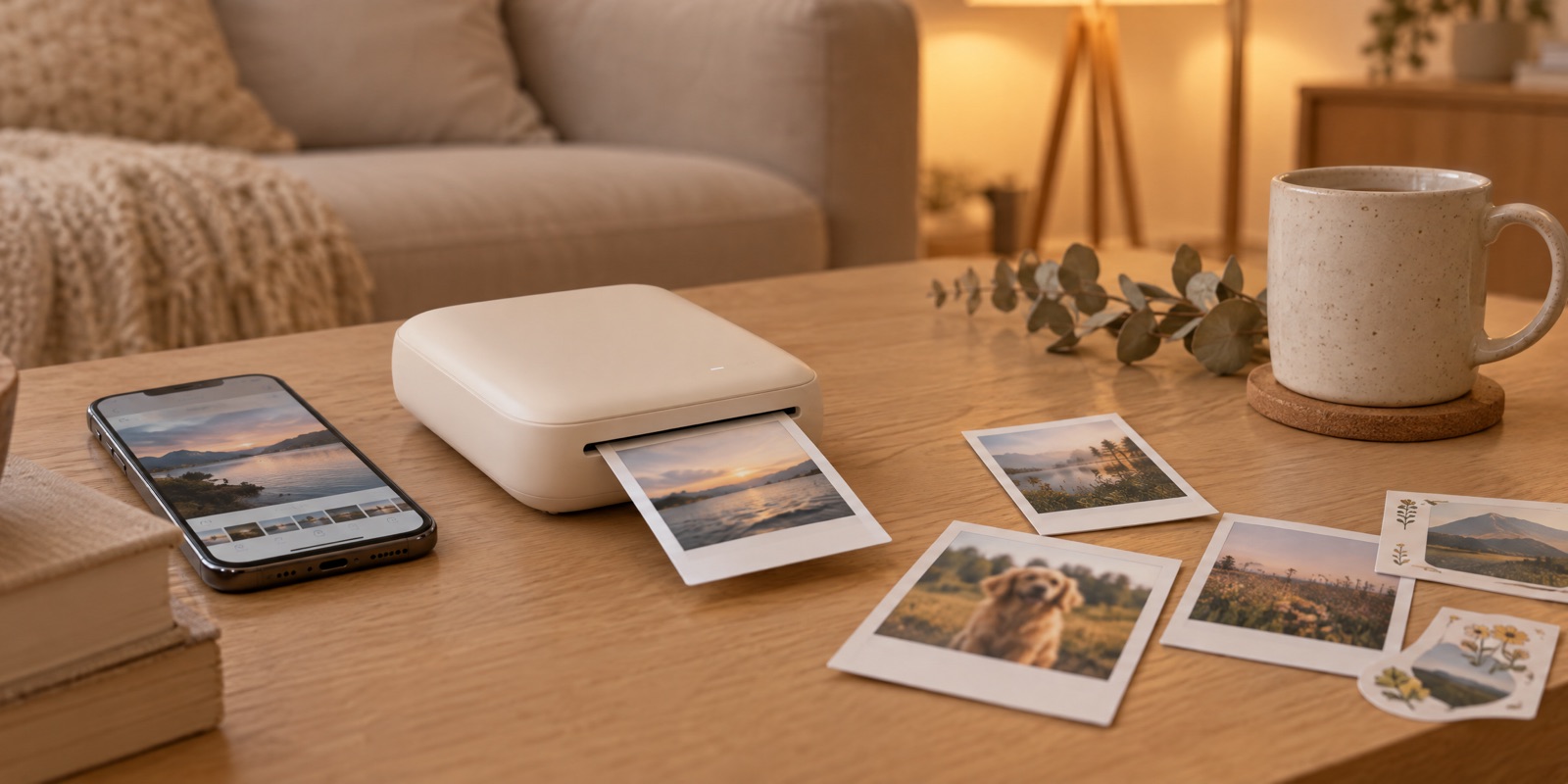
A portable photo printer turns a photo on your phone into something you can hold, stick in a journal, or hand to a friend. They keep showing up on holiday wish lists this year, probably because they make a personal gift with a bit of an analog, nostalgic feel.
Most of them are sold on a cute design and a low price. The design is often charming. The price is where people get caught out, because you pay for the printer once and keep paying for film or paper for as long as you use it. The technology inside also decides whether your prints look like keepsakes or like faded receipts.
The short answer
If you just want the checklist:
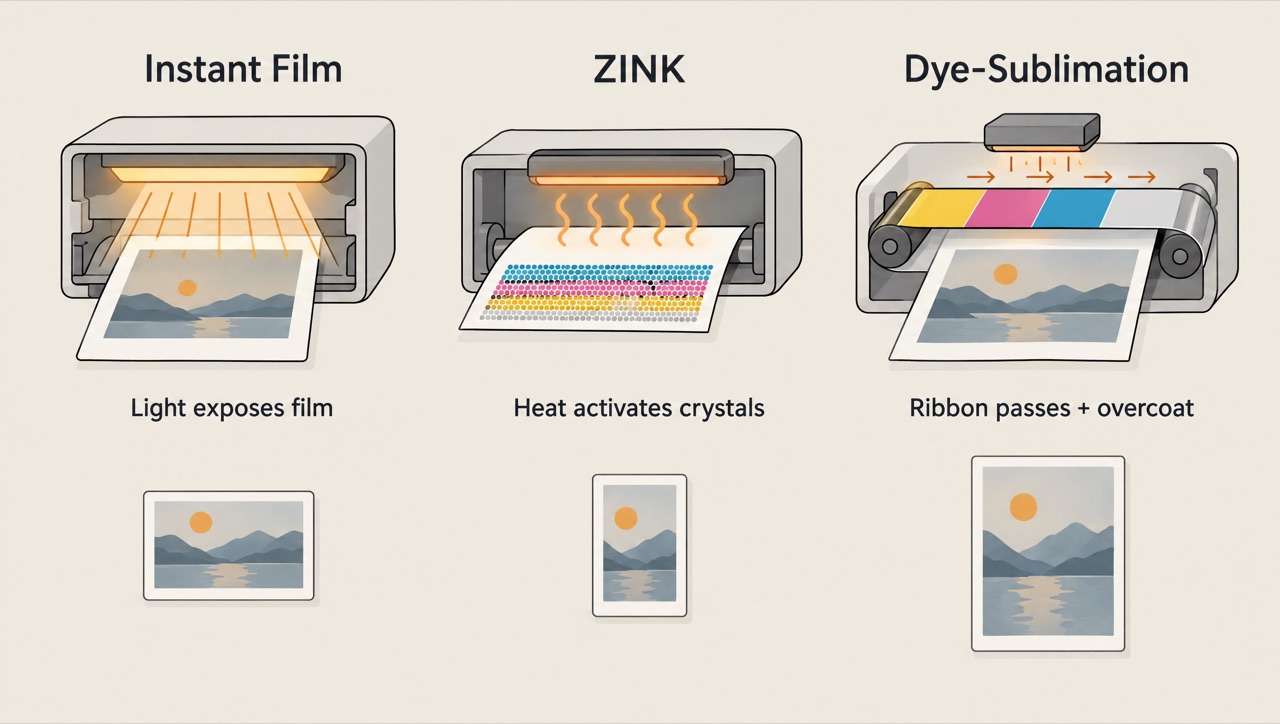
- Choose the print technology first. It sets how the prints look, how long they last, and what they cost. Instant film gives you keepsake prints, ZINK gives you cheap stickers, and dye-sublimation gives you real 4x6 photos.
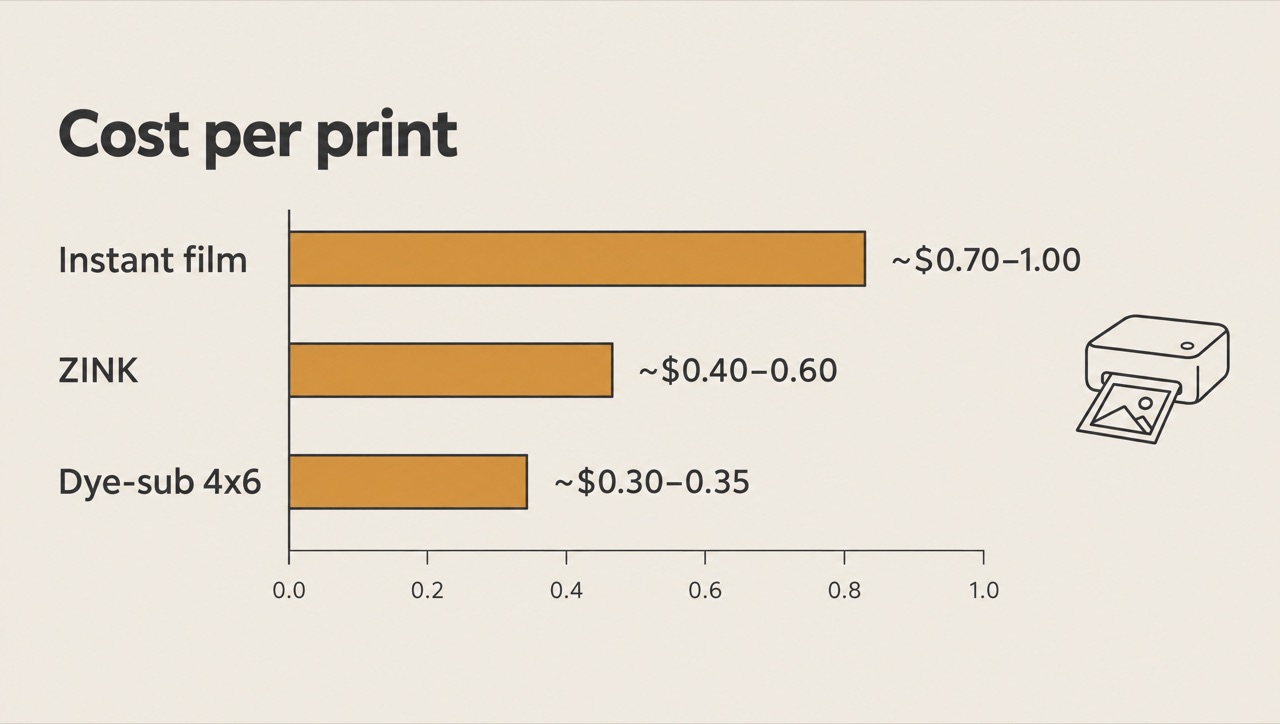
- Look at cost per print, not the printer's price. After a year of printing, you'll have spent more on refills than on the printer. Instant film runs about $0.70 to $1.00 a print, ZINK about $0.40 to $0.60, and a dye-sub 4x6 about $0.30 to $0.35.
- Check the print size. Most "pocket" prints are about the size of a credit card, or smaller. If you want something to frame, you need a printer that makes 4x6 prints, and that won't fit in a pocket.
- Read reviews of the app. Every print goes through it, and a slow app, or one that makes you sign up or shows ads, can ruin a good printer.
Compare live prices and real owner reviews for top portable photo printers on Avorio →
Each type of printer gets the picture onto paper in a different way, and that difference decides how a print looks, how big it is, and what it costs.
Start with the print technology
Pocket printers make photos in one of three ways, and the three end up as quite different products. Listings tend to bury this in the specs, so look for it first.
Instant film (e.g. Fujifilm Instax Link)
These printers expose real instant film using the image from your phone. You get the classic instant-camera look: warm, slightly soft color, a white border, and a picture that develops in your hand. The print feels like a gift in itself, which goes a long way toward explaining why this type tops so many gift lists. The downsides are cost and speed. Film is the most expensive per print, and some models take close to a minute per photo, which gets slow when a whole table wants a copy.
ZINK (zero ink)
ZINK paper already has the color in it, and the printer brings it out with heat, so there's no ink, film, or cartridge to buy. Prints are small, usually 2x3 inches, often with a peel-off sticker back, and they're the cheapest per sheet of the pocket formats. That makes them good for journals and scrapbooks, and for kids. Owners complain most about color. ZINK prints tend to look flat and come out warm or washed out, dark photos get muddy, and the prints don't last as long as the other two types.
Dye-sublimation (e.g. Canon Selphy, Kodak's cartridge printers)
A dye-sub printer runs the paper under a ribbon several times, once for each color and once more for a clear protective coat. The results are the closest you'll get to prints from a photo lab. They resist fingerprints and spills, and they're the cheapest per print at the biggest size: a 4x6 from a Selphy comes to roughly 30 to 35 cents. The catch is size. The 4x6 models are more like a lunchbox than a pocket gadget, and they need a wall outlet unless you buy the optional battery. Kodak's smaller cartridge models sit somewhere in between.
Work out the cost per print
Product pages don't show this number, but it decides whether a printer gets used or ends up in a drawer.
Say one printer is $30 cheaper than another but costs 40 cents more per print. After about 75 prints it's no longer the cheaper one, and some people print that many at a single holiday party. At typical US prices, instant mini film costs about 70 cents to a dollar a shot. ZINK is about 40 to 60 cents a sticker. A dye-sub 4x6 is about 30 to 35 cents, for a much bigger print. Multi-packs and sales change these numbers a lot, so price out the refills you'd buy before choosing a printer.
Watch for two things. The first is gift bundles that come with "20 free sheets," which sounds generous and lasts one afternoon. Judge a bundle on the printer and the refill price, not the starter pack. The second is paper or cartridges you can only buy in one place. If a printer uses an unusual size, you'll pay whatever that one store charges. Common formats like Instax Mini film, 2x3 ZINK, and Selphy KP-108 sets are sold almost everywhere and go on sale often.
"Pocket" prints are small
Product photos are usually close-ups, which make the prints look bigger than they are, so check the real dimensions.
The picture on an Instax Mini print is about the size of a business card. Instax Square and Wide prints are bigger, but they need bigger, pricier printers and pricier film. A standard 2x3 ZINK sticker is smaller than a playing card. For photos to go in a frame, an album, or on a wall, you need a printer that makes 4x6 prints, and right now that means a dye-sub printer you'd carry in a bag rather than a pocket. Think about where the prints will end up (a wallet, the fridge, a journal, a frame) and buy the size that fits.
The app, speed, and other things that get in the way
Every print starts in the printer's phone app, so the app matters as much as the hardware. Many owner complaints in this category have nothing to do with print quality. People complain about apps that make you create an account before you can print, push paid templates, are slow to reconnect over Bluetooth, or stop getting updates, and that last one can leave a working printer stuck after a phone update. Before you buy, read recent reviews of the app in the app store, not just reviews of the printer.
Speed matters more than you'd think, too. A minute per print is fine for one photo and tedious for twenty. A few other things to check:
- Most pocket models charge over USB-C and print a few dozen photos per charge. The 4x6 dye-sub models usually need a wall outlet unless you buy their battery.
- Some apps let more than one phone send photos to the same printer, which is handy at parties and for families.
- Owners of cheap no-name printers often report paper jams and feed problems. Early reviews rarely catch this, but people who've used the printer for months do.
How long the prints last
If you want to keep the photos, the technology matters again. Dye-sub prints, with their clear coating, hold up best against fading, water, and fingerprints. Instant film lasts well if you keep it out of direct sun. ZINK prints are the most fragile. They're fine in a journal or on the fridge, but the colors can shift over time, especially in sun or heat. If the gift is meant to be framed or kept for years, that might settle it.
Once you've picked a print format, you'll be paying its refill price for as long as you own the printer. A sample photo on a product page won't tell you what a year of refills costs, how the colors look after a few months on your fridge, or whether the app still connects after your next phone update. People who print with theirs every week can tell you.
Use Avorio to read long-term owner reviews, see what Reddit thinks, and find the best live price on the photo printer that fits how you'll use it →
Avorio gathers thousands of real user reviews from Reddit, YouTube, and social media and filters out sponsored and AI-generated content. It scores print quality, reliability, and the app experience, and finds the lowest live price.
Search portable photo printers on Avorio →
Frequently asked questions
Which is better, instant film or ZINK?
It depends what the prints are for. Instant film printers like Fujifilm's Instax Link line expose real instant film, so you get the rich color and white border people know from instant cameras, and the prints hold up well. ZINK printers heat special paper that already has the color in it. There's no ink or film, the prints are small and usually have a sticker back, and each sheet costs less. ZINK prints pay for that in color: they look flatter and often come out warm or a little washed out. If the print itself is the gift, get instant film. If you want lots of cheap stickers for a journal, get ZINK.
How much does each print from a portable photo printer really cost?
At typical US prices, instant mini film costs about 70 cents to a dollar a print. ZINK paper is about 40 to 60 cents per 2x3-inch sticker. Dye-sublimation packs like Canon's Selphy 4x6 sets come to about 30 to 35 cents, for a much bigger print. Sales and bulk packs move these numbers a lot. If you print regularly, you'll spend more on refills in a year than on the printer, so compare cost per print first.
Do photos from portable printers fade?
Some do more than others. Dye-sublimation printers like the Canon Selphy add a clear coating to every print, so those hold up best against fingerprints, spills, and fading. Instant film also lasts well if you keep it out of direct sun. ZINK prints are the most fragile. They're fine in a journal or on the fridge, but the colors can shift over time, especially in sun or heat. For photos you want to keep for years, go with dye-sub or instant film.
Avorio filters out sponsored content to show real product reviews from Reddit, YouTube, and social media, and finds the best live prices. Search portable photo printers on Avorio →