

How to Choose an Air Purifier in 2026: Ignore the CADR Race, Focus on Filter Cost
Buying an air purifier used to mean picking a quiet box with a filter in it. Today, you are buying a connected appliance with an app, a PM2.5 readout, and a subscription-style consumable hidden inside it. With spec sheets boasting enormous CADR numbers and "smart" auto-modes, it is easy to overpay for a giant unit you'll mute in a week — or underpay for a machine whose replacement filters cost more per year than the purifier itself.
Here is exactly what matters when choosing an air purifier, and what is just marketing noise.
The short answer
If you want to skip the deep dive, here is the baseline of what to look for in a modern air purifier:
- Filtration: True HEPA is mandatory. Ignore "HEPA-type" and "HEPA-like" — those are unregulated marketing terms. Add an activated-carbon stage if you care about odors, smoke, or VOCs.
- Room match: Match the CADR to a room larger than yours so the unit can fully cycle the air 4–5 times an hour. A purifier "rated for" your exact square footage cleans too slowly.
- Filter cost: This is the real price. Cheap purifiers are razor-and-blades — check the annual cost of replacement filters before you buy, not after.
- Noise: You only get clean air on the settings you can tolerate. A unit that's only quiet on its useless lowest fan speed is a unit you'll turn off.
Check live prices and aggregated Reddit sentiment scores for top true-HEPA models on Avorio →
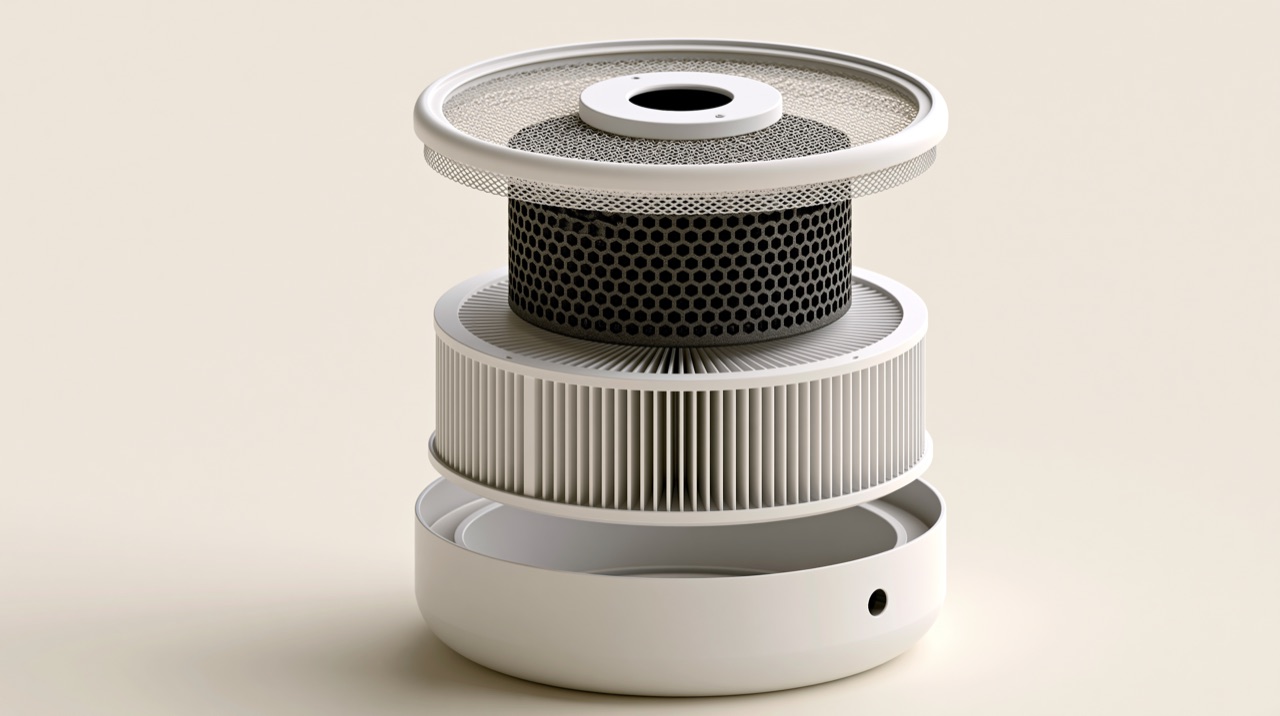
Before we break down what to look for, here's how the air actually moves through a modern purifier — and which stage does the real work:
True HEPA vs. "HEPA-type": the label that costs you
The single most important line on the box is whether the filter is true HEPA.
- True HEPA: A defined, testable standard — captures 99.97% of particles down to 0.3 microns. That 0.3-micron figure matters because it's the hardest particle size to catch; everything larger and smaller is filtered even more effectively. This is the spec that handles fine dust, pollen, wildfire smoke, and pet dander.
- "HEPA-type" / "HEPA-like" / "99% efficient": Unregulated marketing language. These filters are typically looser-weave and let through exactly the fine PM2.5 particles you bought the machine to remove. A "99% at 1 micron" claim sounds close to 99.97% at 0.3 microns — it is not.
If a brand won't plainly say true HEPA and back it with a verified test, walk away. The rest of the spec sheet doesn't matter if the filter doesn't seal and capture.
CADR is real — but the headline number is a trap
CADR (Clean Air Delivery Rate) measures how fast a purifier cleans the air. It's a legitimate, third-party-tested number — but brands abuse it.
The trap is buying the biggest CADR you can afford and assuming bigger is always better. What actually matters is CADR relative to your room. The goal is "air changes per hour" (ACH) — how many times the unit can scrub all the air in the room each hour. For general dust you want around 2 ACH; for allergies, asthma, or smoke you want 4–5 ACH.
The practical rule: take your room's square footage and buy a purifier rated for a room about 1.5x larger. A unit "rated for 400 sq ft" run in a 400 sq ft room only manages a lazy ~2 ACH. Drop that same unit into a 250 sq ft room and it comfortably hits 4–5 ACH — clean air, on a lower, quieter fan speed.
The hidden reality of replacement filters
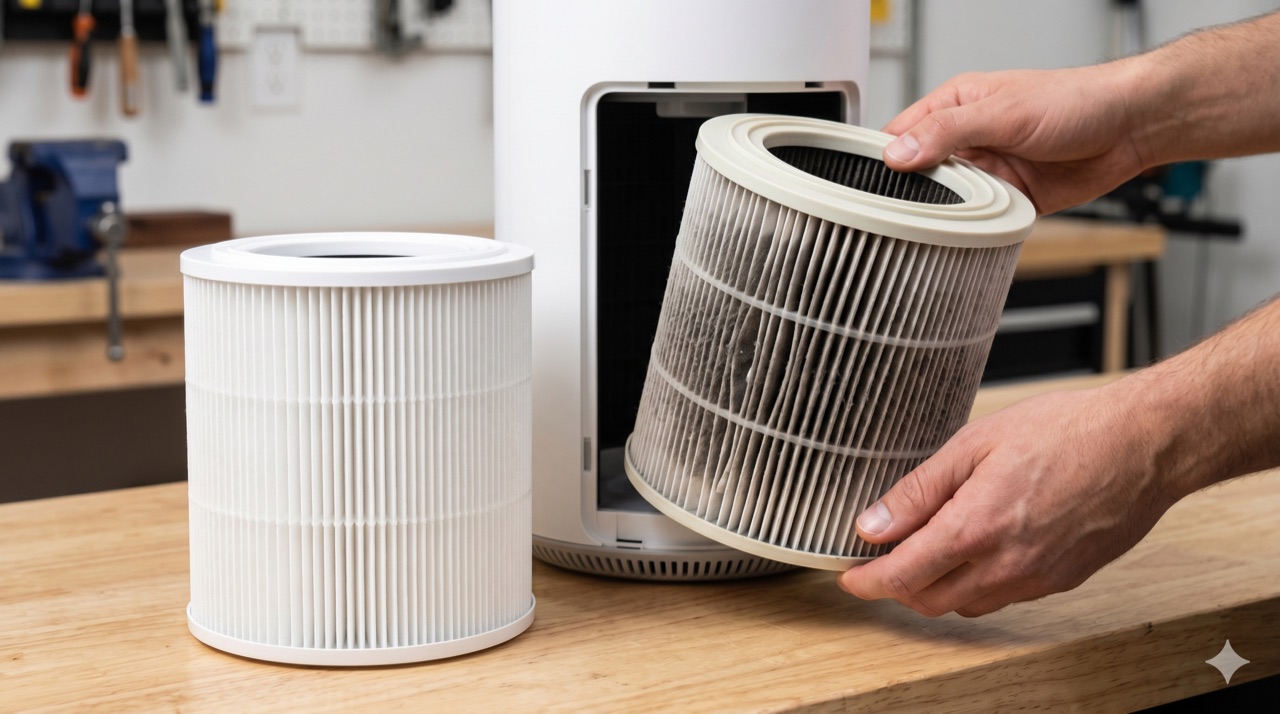
This is where air purifiers quietly become a subscription. The machine is cheap; the filters are forever.
Before you buy, find the replacement filter for that exact model and check two things:
- Annual cost. True HEPA + carbon filters typically need replacing every 6–12 months. Some popular units cost $60–$100 per filter, two or three times a year. Over three years, the filters can quietly cost more than the purifier. Cheaper "deal" purifiers are often the worst offenders — the loss-leader hardware is subsidized by proprietary consumables.
- Proprietary vs. standard. Some brands lock you into a uniquely shaped filter only they sell. If the company discontinues the line or hikes the price, you're stuck. Brands with widely available, reasonably priced filters age far better.
A "smart" sensor that brags about saving filter life is meaningless if a single replacement costs as much as a competitor's whole machine.
Noise and "smart" features: what you'll actually live with
An air purifier only cleans the air on the settings you're willing to run. That makes real-world noise more important than almost any number on the box.
Many units are advertised as "whisper quiet," but only on their lowest fan speed — which often moves too little air to matter. The setting that actually delivers your 4–5 air changes is frequently loud enough to interrupt sleep or a meeting. Look for the decibel rating at medium and high speeds, not just the headline low. Sizing up (above) is the cheat code here: a bigger unit hits your target ACH on a lower, quieter setting.
As for "smart" features, separate the useful from the gimmick:
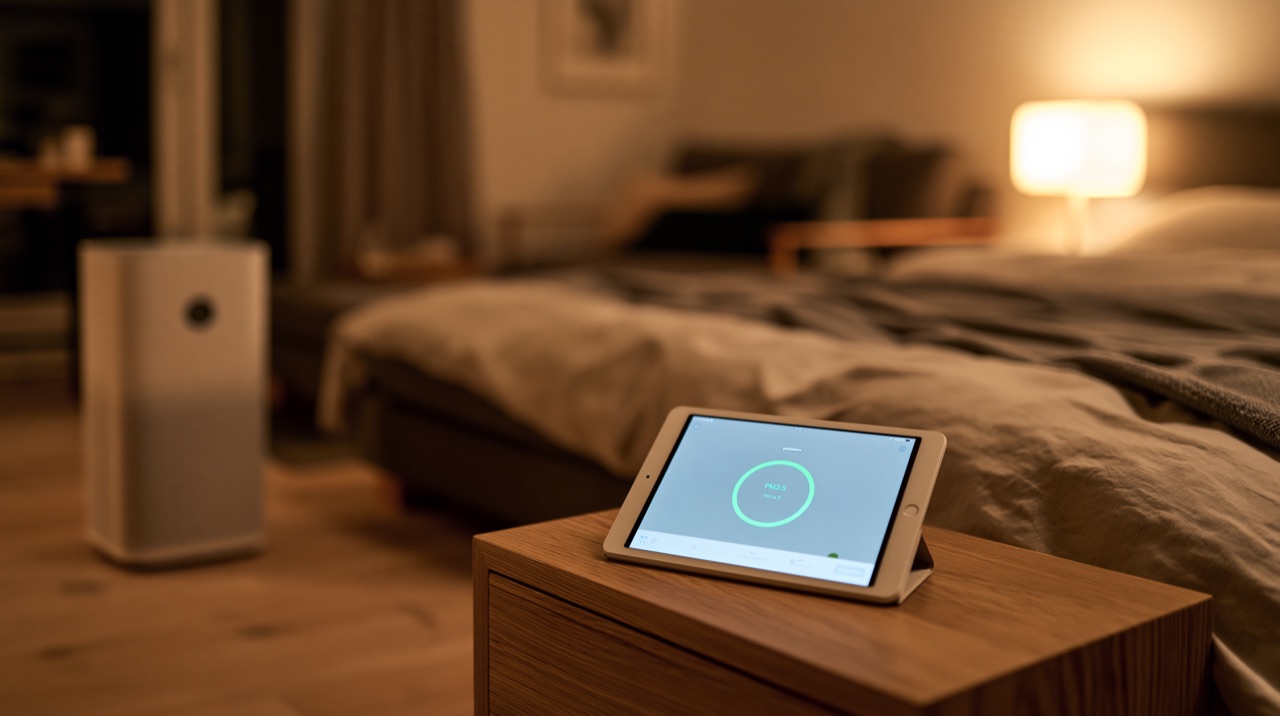
- Worth it: A genuine PM2.5 laser sensor that automatically ramps the fan when it detects smoke, cooking, or pollen, then settles back down. This is real automation.
- Mostly gimmick: Wi-Fi apps that show a pretty air-quality graph, voice-assistant integration, and color-changing mood rings. None of it filters air. Plenty of "smart" units fail at the fundamentals — true HEPA, quiet running, sane filter cost — while charging a premium for the dashboard.
When you buy an air purifier, you are choosing what runs in your bedroom every night for years. The launch-day review can't tell you whether the filters got expensive or the app got abandoned 18 months later — but the people living with it can.
Filter costs and real-world noise don't show up in product photos. Use Avorio to aggregate real consumer reviews, check Reddit reliability sentiment, and find the best live price on true-HEPA purifiers that stay cheap to own →
Don't rely on static reviews to make the final call. Avorio aggregates thousands of real user reviews, filters out sponsored and AI-generated content, scores long-term filter cost and reliability across Reddit, YouTube, and social media, and finds the lowest live price.
Search air purifiers on Avorio →
Frequently asked questions
Do I need a true HEPA air purifier, or is "HEPA-type" good enough?
You need true HEPA. "HEPA-type," "HEPA-like," and "99% filtration" labels are unregulated marketing terms that often let through the fine PM2.5 particles you actually care about. True HEPA is a defined standard that captures 99.97% of particles down to 0.3 microns, and the best units publish a verified test to prove it.
How big an air purifier do I need for my room?
Match the unit's CADR and rated room size to your actual square footage, then size up. A purifier rated for exactly your room size only cleans the air slowly. For allergies or smoke you want a unit that can cycle all the air in the room (one "air change") four to five times an hour, which usually means buying one rated for a room roughly 1.5x larger than yours.
Are smart Wi-Fi air purifiers worth it?
The Wi-Fi app is the least important feature. A real particulate (PM2.5) sensor that ramps the fan up automatically when air quality drops is genuinely useful. A glossy phone app that just shows you a graph is not — and many "smart" units fail at the basics of filtration and quiet running while charging a premium for the dashboard.
Avorio cuts through sponsored content to surface authentic product reviews from Reddit, YouTube, and social media — and finds the best live prices. Search air purifiers on Avorio →