

How to Choose a Smart Ring in 2026: Ignore the Sensor Count, Watch the Subscription
Buying a smart ring used to be a novelty — a step counter you wore on your finger. Today it's a serious sleep and recovery tracker competing with your watch, and the category has exploded with options from established names and a wave of newcomers. With spec sheets boasting sensor counts and "AI-powered insights," it's easy to overpay for a ring whose best features are locked behind a monthly fee — or underpay for one with a flaky app and a battery that's dead in 18 months.
Here is exactly what matters when choosing a smart ring, and what is just marketing noise.
The short answer
If you want to skip the deep dive, here is the baseline of what to look for in a modern smart ring:
- Subscription: Check this first. Some brands lock your real insights behind a monthly membership; others include everything. A "cheap" ring with a mandatory subscription can cost more over three years than a pricier one without.
- Battery & lifespan: 4–7 days per charge is the norm. The sealed battery is non-replaceable and degrades — treat the ring as a 2–3 year device, not forever.
- Fit & sizing: A ring you can't comfortably wear 24/7 tracks nothing. Order the sizing kit, and know that finger size changes with temperature and time of day.
- App honesty: You're buying the software as much as the hardware. The score that matters is whether the app's sleep and recovery data is accurate and actionable — not how many sensors fed it.
Check live prices and aggregated Reddit sentiment scores for top smart rings on Avorio →
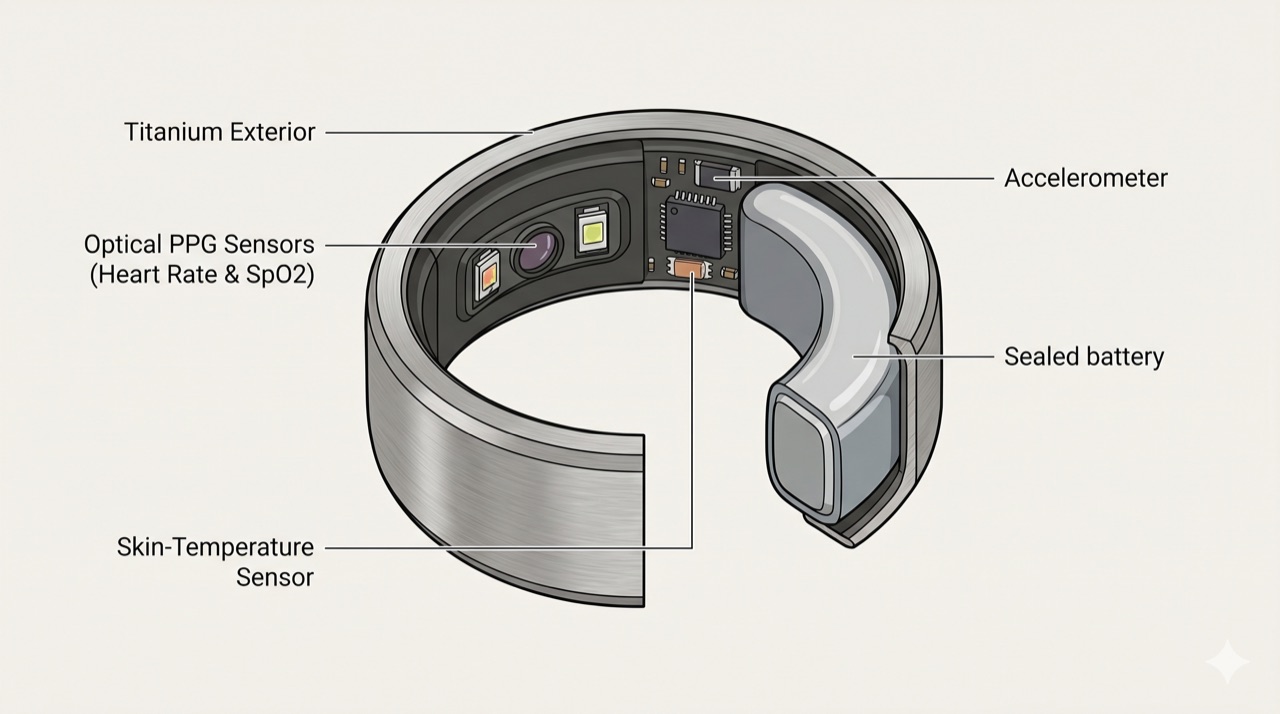
Before we break down what to look for, here's what's actually packed inside a band a few millimeters thick — and why the sensors are the easy part:
The subscription is the real price tag
This is the spec sheets won't put up front, and it's the most important decision you'll make.
A few of the most popular smart-ring brands sell you the hardware at one price, then put your detailed sleep, recovery, and long-term health insights behind a monthly membership. Skip the membership and the expensive ring degrades into a basic step-and-sleep tracker. That turns a $300 purchase into $300 plus roughly $70 a year, indefinitely.
Other brands include every feature in the purchase price — no membership, ever. Neither model is automatically wrong: subscription brands often fund continuous software improvement, while one-time-purchase brands win on total cost of ownership. But you must know which one you're buying.
Run the three-year math before you fall for a low sticker price:
- Subscription ring: sticker price + (monthly fee × 36). A "$299" ring at $5.99/month is really ~$515 over three years.
- No-subscription ring: sticker price, full stop.
A higher up-front price with no subscription frequently beats a "cheaper" ring you have to keep paying to use.
Sensor counts and "AI insights" are mostly marketing
Brands love to advertise how many sensors they've crammed into the band, or that the app delivers "AI-powered health insights." In practice, almost every smart ring uses the same handful of sensors: optical (PPG) sensors for heart rate and blood oxygen, a skin-temperature sensor, and an accelerometer. Adding a "7th sensor" rarely changes what you actually learn.
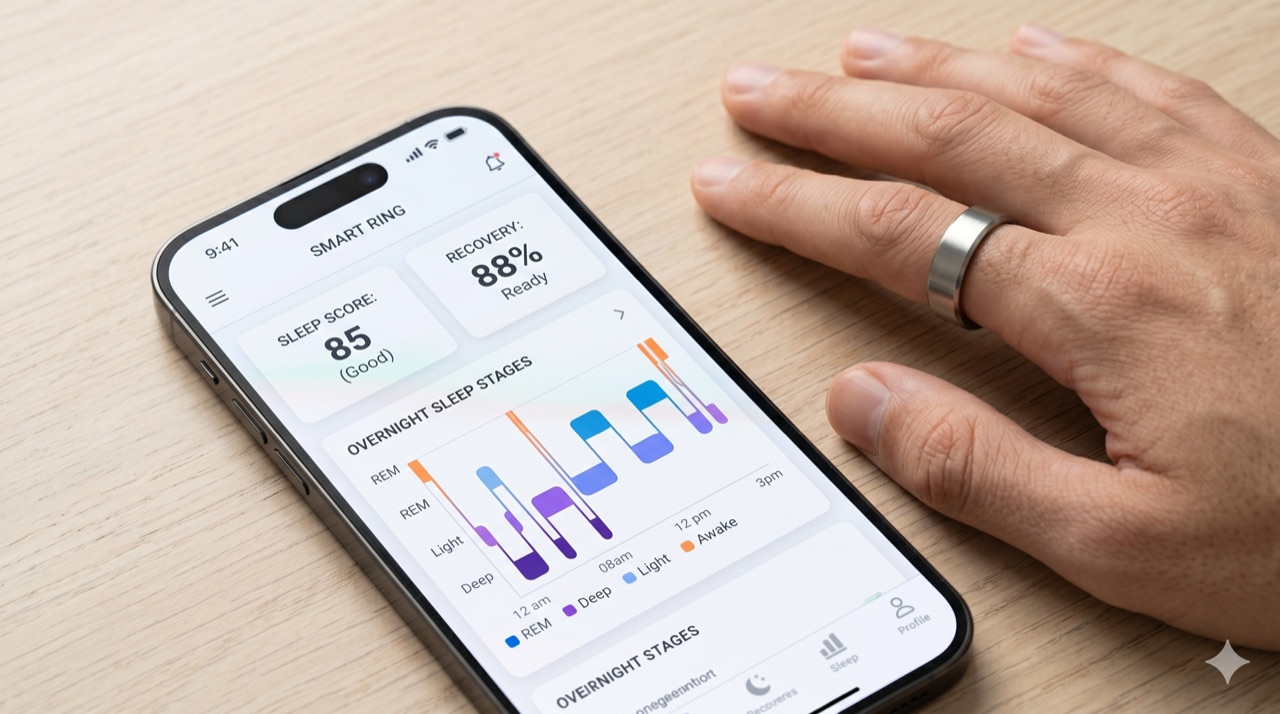
What separates a great ring from a gimmick is the algorithm and the app interpreting that raw data. A well-tuned app turns the same sensor readings into accurate sleep staging, a recovery score you can trust, and trends that actually map to how you feel. A weak one produces a confident-looking dashboard that's quietly wrong — telling you that you slept badly on a morning you feel great.
"AI insights" is the reddest flag of all. Often it's a generic text generator wrapped around your numbers ("Your readiness is low, consider resting"), not genuine analysis. Judge a ring by whether real long-term users find its data accurate and actionable, not by the marketing copy around it.
Battery life, and the battery you can't replace
Most current smart rings last four to seven days per charge, and that's plenty — you charge it for an hour while showering. The headline battery number is not the one to worry about.
The real issue is degradation. A smart ring's battery is sealed inside a solid titanium or ceramic band; there's no way to open it, and essentially no brand offers a battery replacement. Like any lithium battery, it loses capacity over time — and at 18 to 24 months, many users report their once-weeklong ring now needs charging every two or three days. At that point the ring is effectively done.
This makes a smart ring a consumable, not a lifetime device. Factor it into the price: a $300 ring you replace every 2.5 years costs you about $10 a month just in hardware, before any subscription. Check the brand's reputation for battery life two years in, not the pristine launch-day spec.
Fit, sizing, and actually wearing it 24/7
A smart ring's entire value depends on one thing: you keeping it on, day and night. If it's uncomfortable, you'll take it off — and a ring in a drawer tracks nothing.
- Order the sizing kit. Nearly every reputable brand ships a free plastic sizing kit before your real ring. Use it for a couple of days, including overnight. Don't guess from a jewelry ring size.
- Fingers change size. Your finger swells in heat and after exercise, and shrinks in the cold. A ring that's perfect at 9 a.m. can be tight after a workout or loose on a winter morning. The standard advice is to size for your finger at its largest and test it overnight, when a too-tight ring kills both comfort and sensor contact.
- Which finger. Most brands recommend the index or middle finger for the best signal, not the ring finger. If you want to wear a wedding band too, plan for that.
- Durability. Titanium scratches less than coated finishes; if you lift weights or work with your hands, a bare titanium or tungsten-coated band survives better than a glossy one that scuffs.
When you buy a smart ring, you're committing to wearing the same band every night for years and, often, to a software relationship with a fee attached. The launch-day YouTube review can't tell you whether the battery faded, the app got worse, or the subscription price climbed — but the people two years into ownership can.
Subscription costs, battery degradation, and app accuracy don't show up in product photos. Use Avorio to aggregate real long-term owner reviews, check Reddit sentiment, and find the best live price on the ring that's actually cheapest to own →
Don't rely on static reviews to make the final call. Avorio aggregates thousands of real user reviews, filters out sponsored and AI-generated content, scores long-term battery life, subscription value, and app accuracy across Reddit, YouTube, and social media, and finds the lowest live price.
Search smart rings on Avorio →
Frequently asked questions
Do smart rings require a monthly subscription?
Some do, some don't, and this is the single biggest thing to check before buying. A few popular brands lock your detailed sleep, recovery, and health insights behind a monthly membership — so a $300 ring quietly becomes a $300 ring plus ~$70 a year forever. Other brands include all features in the purchase price. Neither is automatically better, but you must know which one you're buying.
Are smart rings more accurate than smartwatches?
For sleep and resting heart rate, rings are generally as good as or better than wrist wearables, because the finger gives a stronger, more stable signal at rest and the ring stays on overnight when many people remove a watch. For active workout heart rate, a chest strap still wins, and most rings don't track continuous exercise heart rate well at all.
How long do smart ring batteries last?
Most current smart rings last four to seven days per charge. The number that matters more is degradation: a sealed ring battery loses capacity over 18–24 months and usually cannot be replaced, which effectively makes the ring a consumable. Check the brand's track record on battery life two years in, not just the launch-day spec.
Avorio cuts through sponsored content to surface authentic product reviews from Reddit, YouTube, and social media — and finds the best live prices. Search smart rings on Avorio →